
Allt du velat veta
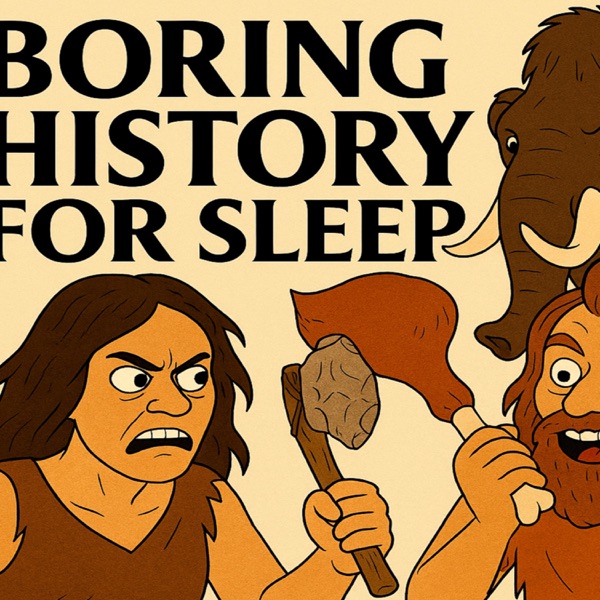
What if the asteroid had missed Earth 66 million years ago? Instead of disappearing, dinosaurs might have continued evolving, adapting to changing climates and competing with an entirely different set of species. This documentary explores one of the most fascinating questions in natural history: what could Earth look like if dinosaurs had survived? From changing ecosystems and evolving dinosaur species to the possible fate of mammals and the emergence of intelligent life, we’ll explore a world where the great extinction never happened. Would mammals still have risen to dominance? Could dinosaurs have developed radically different forms? And would humans ever have appeared in a world still ruled by dinosaurs? Settle in for a calm journey through an alternate history of Earth and imagine the planet that might have existed if the dinosaurs had never disappeared. Boring History for Sleep — Soft stories about dinosaurs, ancient worlds, evolution, and the mysteries of what might have been.
What if the asteroid had missed Earth 66 million years ago? Instead of disappearing, dinosaurs might have continued evolving, adapting to changing climates and competing with an entirely different set of species. This documentary explores one of the most fascinating questions in natural history: what could Earth look like if dinosaurs had survived? From changing ecosystems and evolving dinosaur species to the possible fate of mammals and the emergence of intelligent life, we’ll explore a world where the great extinction never happened. Would mammals still have risen to dominance? Could dinosaurs have developed radically different forms? And would humans ever have appeared in a world still ruled by dinosaurs? Settle in for a calm journey through an alternate history of Earth and imagine the planet that might have existed if the dinosaurs had never disappeared. Boring History for Sleep — Soft stories about dinosaurs, ancient worlds, evolution, and the mysteries of what might have been.
What if the asteroid had missed Earth 66 million years ago? Instead of disappearing, dinosaurs might have continued evolving, adapting to changing climates and competing with an entirely different set of species. This documentary explores one of the most fascinating questions in natural history: what could Earth look like if dinosaurs had survived? From changing ecosystems and evolving dinosaur species to the possible fate of mammals and the emergence of intelligent life, we’ll explore a world where the great extinction never happened. Would mammals still have risen to dominance? Could dinosaurs have developed radically different forms? And would humans ever have appeared in a world still ruled by dinosaurs? Settle in for a calm journey through an alternate history of Earth and imagine the planet that might have existed if the dinosaurs had never disappeared. Boring History for Sleep — Soft stories about dinosaurs, ancient worlds, evolution, and the mysteries of what might have been.
This episode explores the dramatic geological and biological transformation of Antarctica, from its origins as a lush, temperate part of the supercontinent Gondwana to its current state as a frozen wasteland. Through fossil evidence like coal, pollen, and dinosaur remains, we reconstruct a vibrant Jurassic ecosystem characterized by seasonal forests, volcanic activity, and a complex food web of armored herbivores and apex predators like Cryolophosaurus. The narrative traces the continent's slow southward drift and eventual isolation, which triggered a catastrophic climatic shift. We examine how the sudden asteroid impact 66 million years ago and the subsequent gradual cooling—driven by declining carbon dioxide and the formation of the Antarctic Circumpolar Current—permanently altered the planet, turning a biological crossroads into a thermally quarantined ice sheet.
This episode explores the life of Joan Kennedy, tracing her journey from a controlled upbringing in Bronxville to her role as a prominent political figure within the Kennedy dynasty. It examines the profound tension between her curated public persona—as a polished, supportive senator's wife—and her complex private reality, marked by the emotional toll of navigating infidelity, family tragedy, and addiction. Beyond the political spotlight, the narrative highlights Joan's identity as an accomplished classical pianist and her eventual pursuit of independence following her separation from Ted Kennedy. Ultimately, her story serves as a broader commentary on the societal pressures placed upon women to maintain a perfect outward appearance at the expense of their true selves.
This episode traces the evolution of the English East India Company from a group of London merchants seeking a spice monopoly to a sovereign corporate power that reshaped global geopolitics. Through the invention of the joint stock model and strategic maneuvers in India, the Company transitioned from a mere trading entity into an extractive machine capable of minting coins, administering justice, and even conducting large-scale drug trafficking via the opium trade. The narrative explores the devastating human costs of this expansion, including the 1770 Bengal famine and the Opium Wars, as well as the eventual collapse of Company rule following the 1857 Indian Rebellion. Ultimately, the episode reflects on the enduring legacy of the Company's corporate model, drawing parallels between its pursuit of profit without accountability and the structural dynamics of modern global enterprises.
This episode traces the epic trajectory of human evolution and civilization, from the metabolic challenges of early hominins to the rise of complex imperial bureaucracies. It explores how dietary shifts, the mastery of fire, and the development of stone tools facilitated the expansion of the genus Homo across changing landscapes shaped by glacial cycles and climatic shifts. As populations grew and migrated, technological innovations like needle-making, metallurgy, and the wheel transformed human existence. The narrative details the transition from nomadic foraging to sedentary agricultural societies, highlighting how the accumulation of surplus and the establishment of social networks led to the birth of permanent settlements, organized religion, and the first territorial empires.